
Categories
Your boss’s superyacht has better internet than your company's office
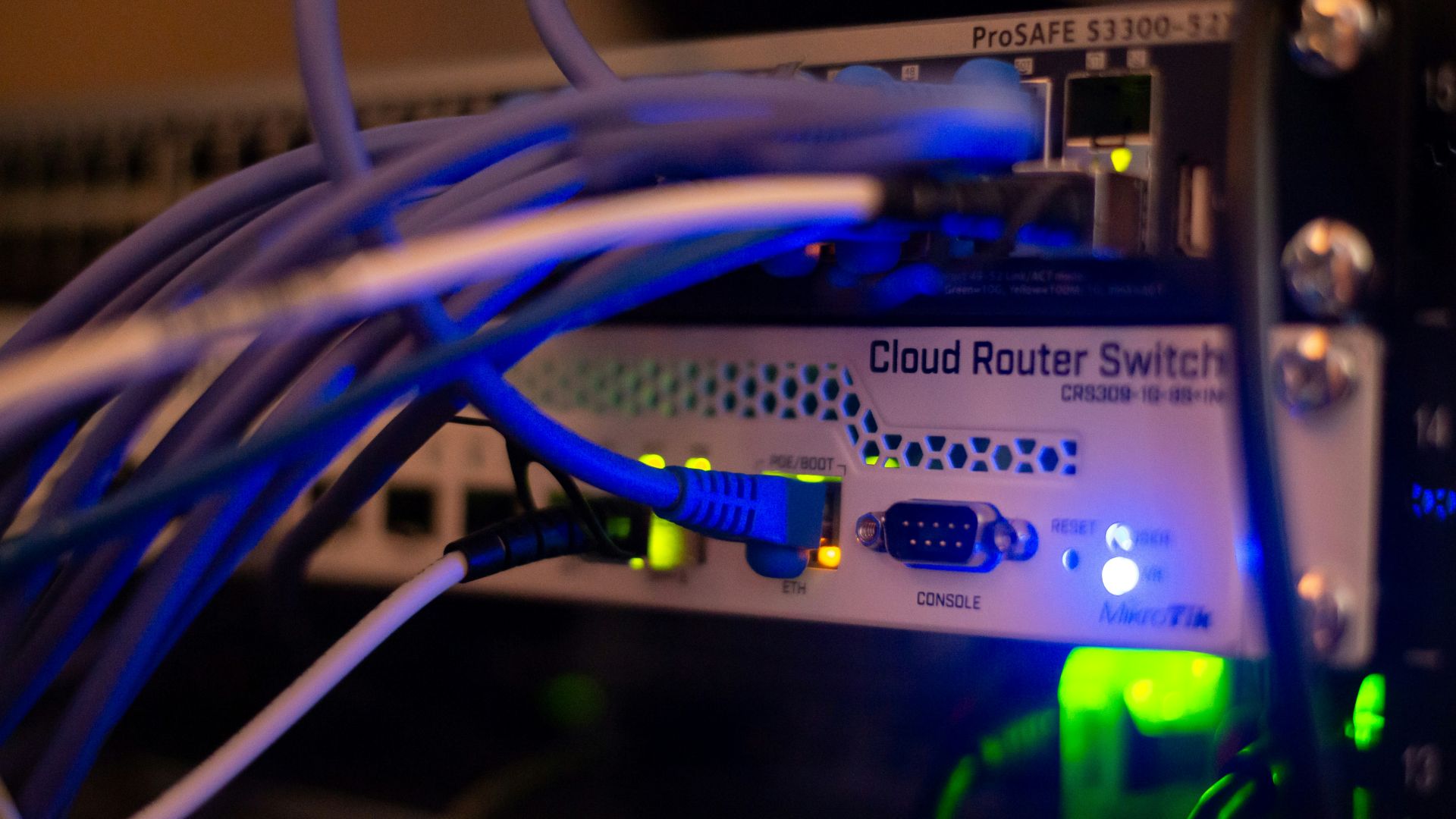
For nearly two decades, I have worked onboard superyachts. In that time, I often found myself standing in front of a billionaire explaining why a video call had frozen or dropped in the middle of an all-important meeting. It is not a position any AVIT Officer or ETO wants to be in, ever. Troubleshooting such problems while well-heeled guests impatiently wait is not a recommended superyacht experience.
What many outside the industry may not realise is this: a 100-metre superyacht is comparable in data and connectivity demands to a floating, 200-person company with a data centre, a hotel, a hospital, gyms and spas, and a power station onboard.
And, of course, a superyacht moves constantly. It may be located within easy range of land-based 5G networks, or it may be in the middle of the Pacific Ocean relying on Starlink.
For these reasons, the data and connectivity requirements for superyachts have gone far beyond what they were even just a few years ago. In fact, the numbers are getting silly.
I founded NEGU, a connectivity supplier to superyachts, to deal with these facts about modern superyachts, which are now as much about their digital capabilities as they are about seaworthiness.
Since May this year, we have delivered just under 1 petabyte to superyachts. That works out to 7.5 terabytes per day, every day. That roughly equates to 16 years of uninterrupted 4K Netflix streaming delivered in one summer. But these numbers really aren’t surprising when you consider how owners actually use their superyachts in the 21st century. As a former member of a superyacht crew, I have learned a few things about what the 0.01% actually do with their internet at sea.
Firstly, Covid changed everything. Owners do not come to their superyachts to “unplug”; quite the opposite. Owners now expect to be fully plugged in, and they will run their companies from onboard their yacht for weeks at a time. That includes board meetings and even large deals being signed while on the yacht. Therefore, it is no longer enough to be “available” during a superyacht stay. The superyacht is now a corporate office by day, and that means connectivity to match a New York office suite.
Of course, doing business involves more than signing documents and sitting in meetings. Owners will often continue market trading from their superyacht, whether from the onboard office or the aft deck at sundown. That means the phrase “the internet is a bit slow” can cost an owner more than the fuel bill.
At NEGU, we have worked hard on the question of speed. Starlink fixed speed problems in most cases, but we go further. We cut the 200 milliseconds most yachts waste bouncing through four different networks after the satellite to under 60 milliseconds in most cases. Cutting milliseconds may sound negligible to the untrained ear, but performing such feats is the new necessity for ETOs and the companies that support them. One cannot accept “just good enough” when millions of dollars may be at stake.
To achieve our gains at NEGU, we work without investors or a parent company. There are plenty of late nights in data centres playing with wires and network switch configurations and, above all, a refusal to accept “that’s just how it is at sea!” We have our own infrastructure and network with hubs on both sides of the Atlantic and in APAC.
Welcome to the new normal.
So, if your company’s founder has a superyacht, they’re probably on a better connection at anchor than you are at your desk. And if not, they will demand it.
Author Bio:
Dan Briggs is the founder of NEGU, which provides bandwidth and connectivity for superyachts and private aviation.