
Categories
Tom Humphreys sees a future for wind-assist technology on superyachts
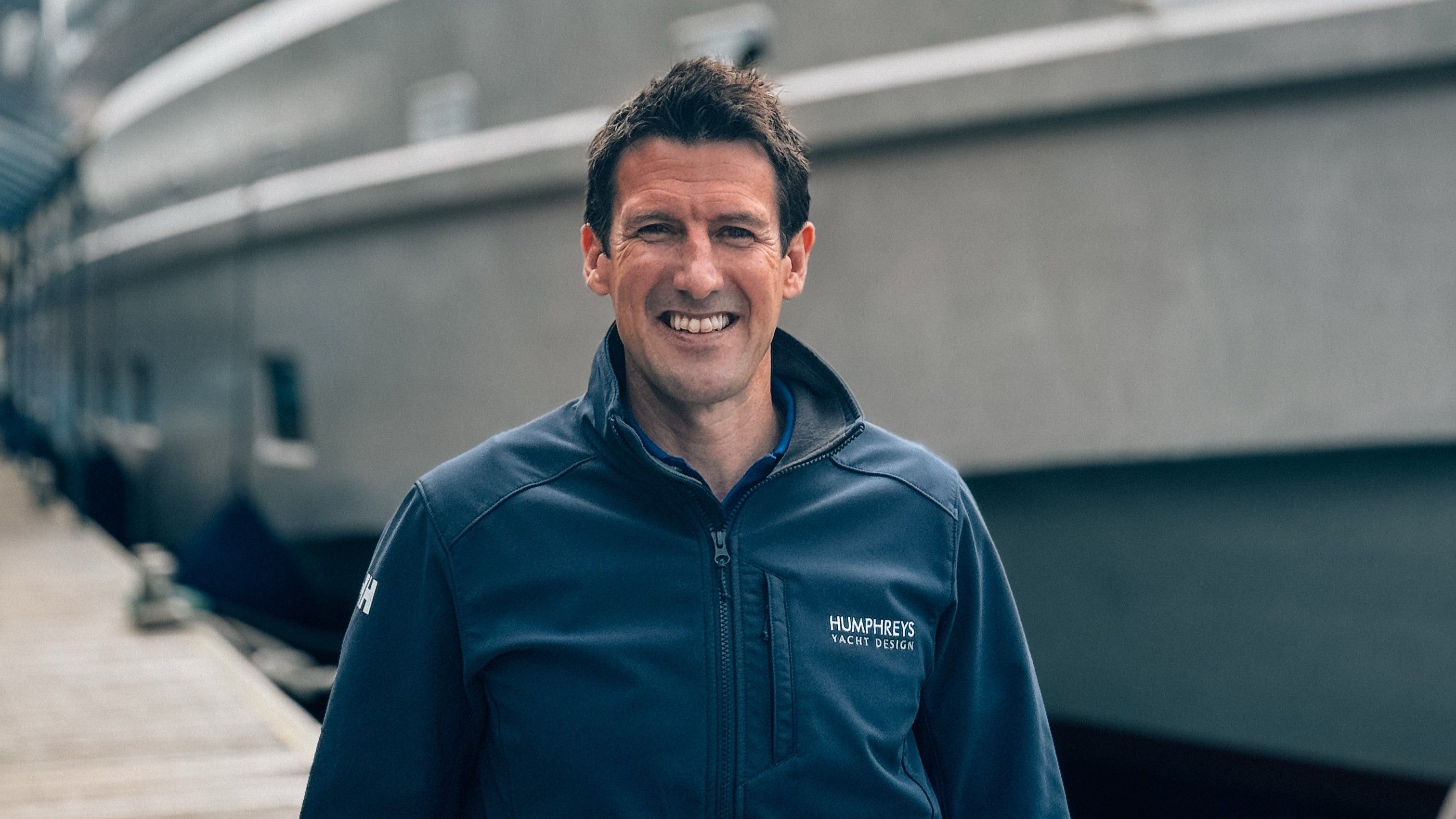
Humphreys Yacht Design has become a legendary name in racing yacht design with a hard focus on efficiency and seaworthiness. That ethos is finding its way into the realm of large motor yachts, as owners begin to treasure comfort and range.
“I think yachts are being used increasingly as a sort of experience platform for owners, and we have seen that perhaps with Arksen and Oyster as well,” says Tom Humphreys. “Certainly, the requirement to broaden the operating capabilities of a vessel is what's freshest in our minds from certain projects that we've been heavily involved in.”
Humphreys and his eponymous firm were behind the hull design for the Arksen 85, a celebrated though niche long-range cruising yacht which boasts an incredible 7,000 nautical mile range in favourable conditions at a cruising speed of about 9 knots.
Most intriguingly, Humphreys sees a possible future for wind-assisted propulsion in superyachts. Soft sails traditionally used by sailing superyachts are more difficult to manage, require specially trained crew, and reduce usable deck space. Humphreys sees that wind-assist solutions – so named because they are designed to boost range and cut fuel use with wind, rather than acting as main propulsors – could have a place in future superyachts.
“If we take a project like Black Pearl, which has demonstrated a significant reduction in the use of fossil fuels across transatlantic crossings, I can see a line of wind-assist or motor sailers, for want of a better description,” Humphreys says. “There's a lot of scope to start exploring how that could work in the superyacht sector.”
As part of an industry consortium called Smart Green Shipping, Humphreys developed the Fast Rig Sail, a foldable wing sail that is easily deployed and retrieved, with a design focus on minimal crew requirements. The concept was developed with commercial cargo ships in mind, but it could have leisure uses.
“For a long time, we have seen that the next step is seeing it integrated into 60 to 100-metre large yachts,” says Humphreys. “If we are looking at ways of making a significant reduction to fuel consumption, and particularly with the increase in popularity of the explorer yacht concept, there is a lot more opportunity to integrate that sort of technology on those sorts of vessels.”
On being fast and efficient
The explorer yacht craze continues to grow. The latest BoatPro data suggests that in 2026, there were 837 motor superyachts in build, 69 sailing superyachts, and 101 “expedition” superyachts.
For Humphreys, the Arksen experience pointed to the kind of hull shape that may also define superyachts of the future. Humphreys’ work focused on creating the ModeShift hull, an advanced fast-displacement platform that gives fuel efficiency at displacement and semi-displacement speeds.
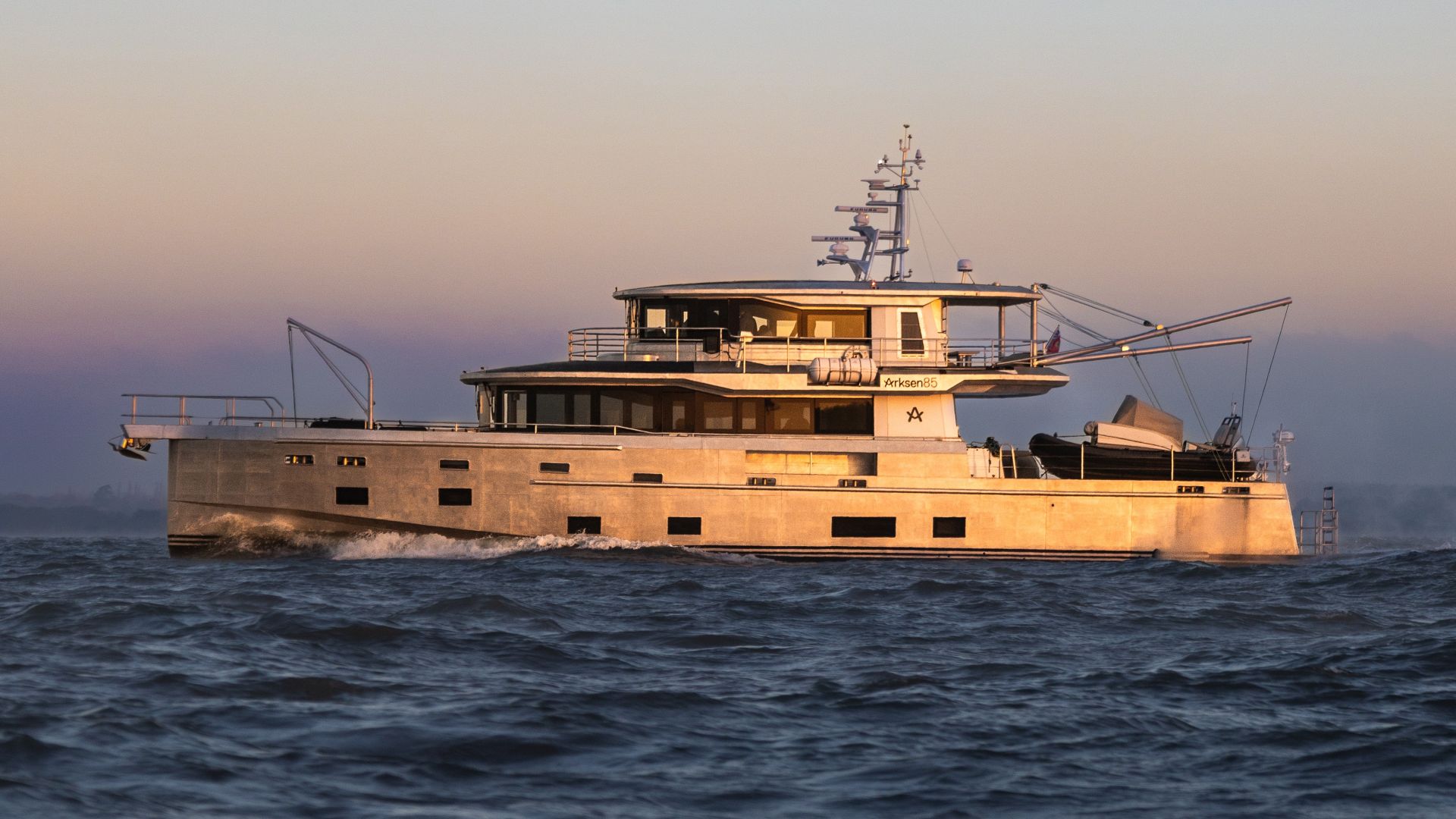
The Arksen 85 gets enormous range on its ModeShift hull shape by HYD
The ModeShift hull, a trademarked design, was developed through a long process of hydrodynamic analysis and optimisation. Humphreys notes that the firm’s yacht racing background was part of the experience needed to help develop the ModeShift hull. In fact, Humphreys’ work on the ModeShift hull predated the firm’s involvement with Arksen.
A big part of the design involved “smoothing the transition” along the hull shape to allow a switch from displacement speeds to faster speeds without losing efficiency. “There are conflicting hull form characteristics at either end (of the hull), and we’ve got to find the common ground and figure out how we can almost trick the yacht at different ends,” says Humphreys.
Humphreys Yacht Design is not done tricking and tweaking the ModeShift hull to squeeze out more capability. In 2026, France’s JFA Yachts launched the 50-metre Canoa, based on a fast-displacement hull design from Humphreys and bearing a striking visual similarity to the Arksen 85.
“With owners, time is everything. So having a vessel that can perform that bit better... we've got a relatively high top speed and it also allows much faster cruising speeds as well, but it is still very efficient at the slower speeds.” That, Humphreys says, allows for more operational flexibility to get as much cruising into a cruising period as possible.
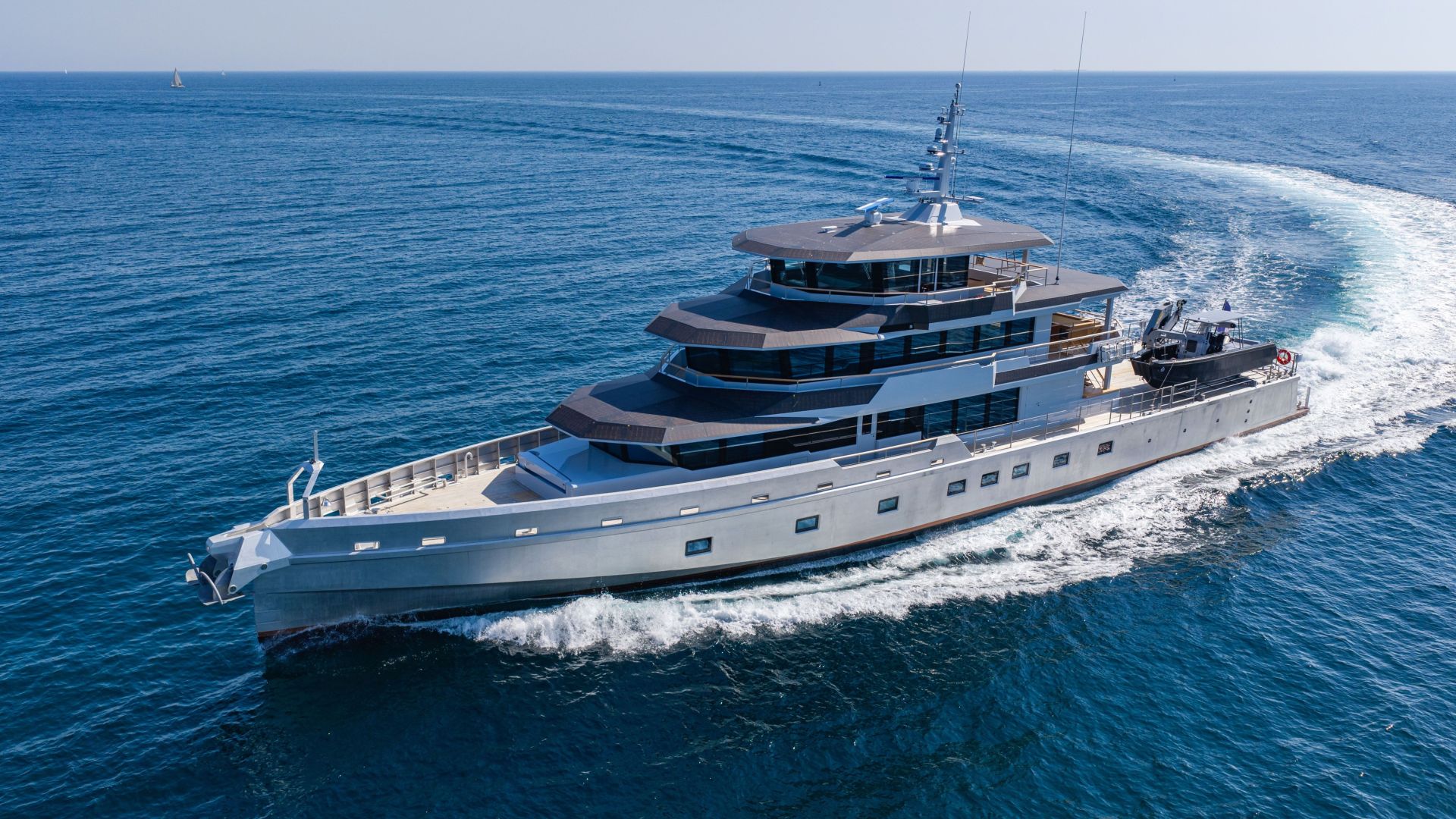
The 50-metre Canoa by JFA Yachts achieves nearly trans-oceanic range at fast displacement speeds
The aim, as it might have been in years past, is not forsaking speed for efficiency, but rather finding both. “From our experience, I don’t think it is an either/or,” says Humphreys, pointing out that the 50-metre Canoa can almost manage transatlantic crossings at 17 knots.
Whether it is wind-assist solutions or highly specialised hull shapes, Tom Humphreys reckons that a new era may be dawning, with a smart focus on capability and efficiency. In part, this is aided by the rise of design tools that allow better cooperation and more adventurous thinking between designers, naval architects, and engineers. “I think the days of old, where it was a case of just putting more and more power into a vessel to achieve these higher speeds and take the fuel burn as par for the course… I think those are outdated days.”
One thing that intrigues Humphreys about the superyacht industry is that technological advances can come with a single, curious owner. “You do have these owners that are looking to challenge convention and are prepared to take higher risks than you'll see in the commercial sector. The great thing is that helps drive the whole industry forward.”