
Categories
Superyacht battery types explained
Battery systems have become a standard specification on many new superyachts. They power silent nights at anchor, zero-emission harbour manoeuvres and hybrid propulsion. But “lithium-ion” covers several distinct chemistries with different properties, strengths and weaknesses. Non lithium options are also available in the maritime sector with their own properties. A lithium-ion battery is actually a family of battery types.
Three key factors – how much energy fits in a space, how long the battery lasts, and safety – are all impacted by the chemistry of a battery.
NMC: maximising energy per kilo
Lithium nickel manganese cobalt oxide (NMC) batteries store the most energy per kilo and per litre (volume) of the established marine chemistries, typically around 150–270 Wh/kg at cell level. That made it the default for early hybrid yachts and ferries, where every cubic metre below deck counts. It is also common in EVs and handheld or portable electronics, such as laptops.
The trade-off is thermal stability. NMC cathodes release oxygen when overheated, so thermal runaway, a self-sustaining chain reaction, can begin at relatively low temperatures (roughly 150–200 °C) and is hard to stop once underway. NMC installations therefore need robust cooling, gas detection, ventilation and fire suppression. Cycle life is moderate, usually 1,000–3,000 full cycles.
Cost: NMC is the pricier of the two mainstream lithium-ion chemistries, because nickel and cobalt are expensive and their prices volatile. In BloombergNEF’s 2025 battery price survey, average NMC pack prices were around 60% higher than LFP’s.
LFP: the safety-first workhorse
Lithium iron phosphate (LFP) has lower energy density, at 90–180 Wh/kg, but much better stability. Its phosphate structure holds on to oxygen, so thermal runaway starts at higher temperatures and is far less violent. LFP also lasts considerably longer, often 3,000–8,000 cycles, and contains no cobalt or nickel, easing cost and supply-chain concerns.
For yachts, the main downside is size: storing the same energy needs more cells and more space. Yet LFP’s gentler failure behaviour simplifies safety systems around it. That balance has made LFP a common choice across the maritime sector, and major marine suppliers now offer class-approved LFP systems.
Cost: LFP is the cheapest mainstream lithium-ion chemistry per kWh, and its spread has driven much of the recent fall in battery prices across all markets. Its long cycle life lowers lifetime cost further, because the battery needs replacing less often.
LTO: built for speed and endurance
Lithium titanate (LTO) replaces the usual graphite anode with a titanate one. Energy density is low, around 50–90 Wh/kg, but LTO can charge and discharge at very high rates, survives 10,000–20,000 or more cycles, and is extremely resistant to thermal runaway.
That profile suits vessels that charge many times a day, such as harbour ferries and tugs, far more than superyachts. On a yacht, LTO can make sense for a high-power system handling frequent short bursts. It is rarely the answer when the goal is hours of silent running at anchor.
Cost: LTO costs considerably more per kWh than LFP; a technical article by LTO maker Toshiba assumes roughly three times as much (EEPower). On vessels that cycle several times a day, its very long life can still make it the cheaper option over a decade.
Sodium metal chloride: the newcomer
Sodium metal chloride batteries, often called ZEBRA batteries, work differently from lithium-ion. They use molten sodium and nickel chloride separated by a solid ceramic electrolyte, and operate internally at around 270–350 °C inside an insulated casing.
Their key strength is safety. The chemistry does not produce the gas-venting, self-sustaining runaway associated with lithium-ion, and a failed cell typically short-circuits so the rest of the string keeps working. They also tolerate extreme ambient temperatures.
The drawbacks are modest energy density, limited power output and the need to stay hot: left idle and uncharged, the battery uses its own energy to keep warm. That makes it better suited to backup and auxiliary roles than to propulsion.
Cost: Made in small volumes and using nickel, sodium metal chloride batteries cost more per kWh than mainstream lithium-ion, and cost is one of their main drawbacks (SolarQuotes). Some developers claim a lower lifetime cost than lithium-ion, though those figures come from the manufacturers themselves (Business News).
Sodium-ion: one for the future?
Sodium-ion is not the same as molten-salt sodium technology. These cells work like lithium-ion at room temperature but use inexpensive sodium. Energy density sits around LFP’s level or slightly below, cold-weather performance is strong, and the chemistry is considered stable. Large cell manufacturers are scaling production, but marine-certified systems are still not available, so sodium-ion remains a future option.
Cost: Sodium is far cheaper than lithium, but at current production volumes sodium-ion cells still cost slightly more than LFP. Wood Mackenzie does not expect price parity with LFP until around 2035 (Wood Mackenzie).
Cells are only the start
Cell-level energy density is only factor in a marine battery system, which also includes cooling, battery management, enclosures, gas detection, ventilation and fire suppression, all governed by classification society rules from bodies such as DNV, Lloyd’s Register and Bureau Veritas.
These considerations are also factors in choice of chemistry. A high-density chemistry that needs heavy safety infrastructure can end up occupying almost as much space as a more stable one that needs less.
Marine-grade battery systems cost several times more per kWh than car or grid batteries, and power electronics, installation and safety measures on vessels add to the bill. Chemistry choice therefore moves the price of a yacht’s battery system less than the certification and integration around it.
The right choice depends on how the yacht will be used. Long, quiet nights at anchor call for plenty of stored energy at modest power, where NMC or LFP fit best. Hybrid propulsion with frequent power peaks favours chemistries that handle high currents and many cycles. Owners who put fire safety above all may accept a larger footprint for LFP or consider non-lithium options for auxiliary loads.
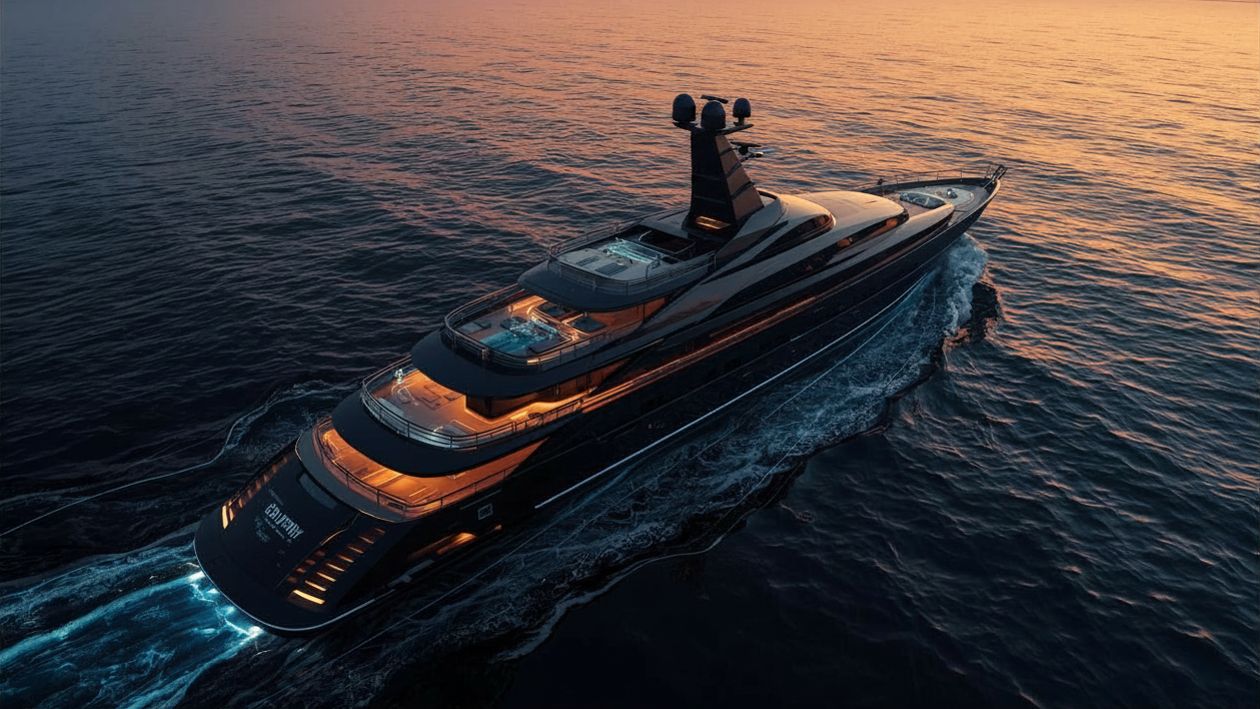
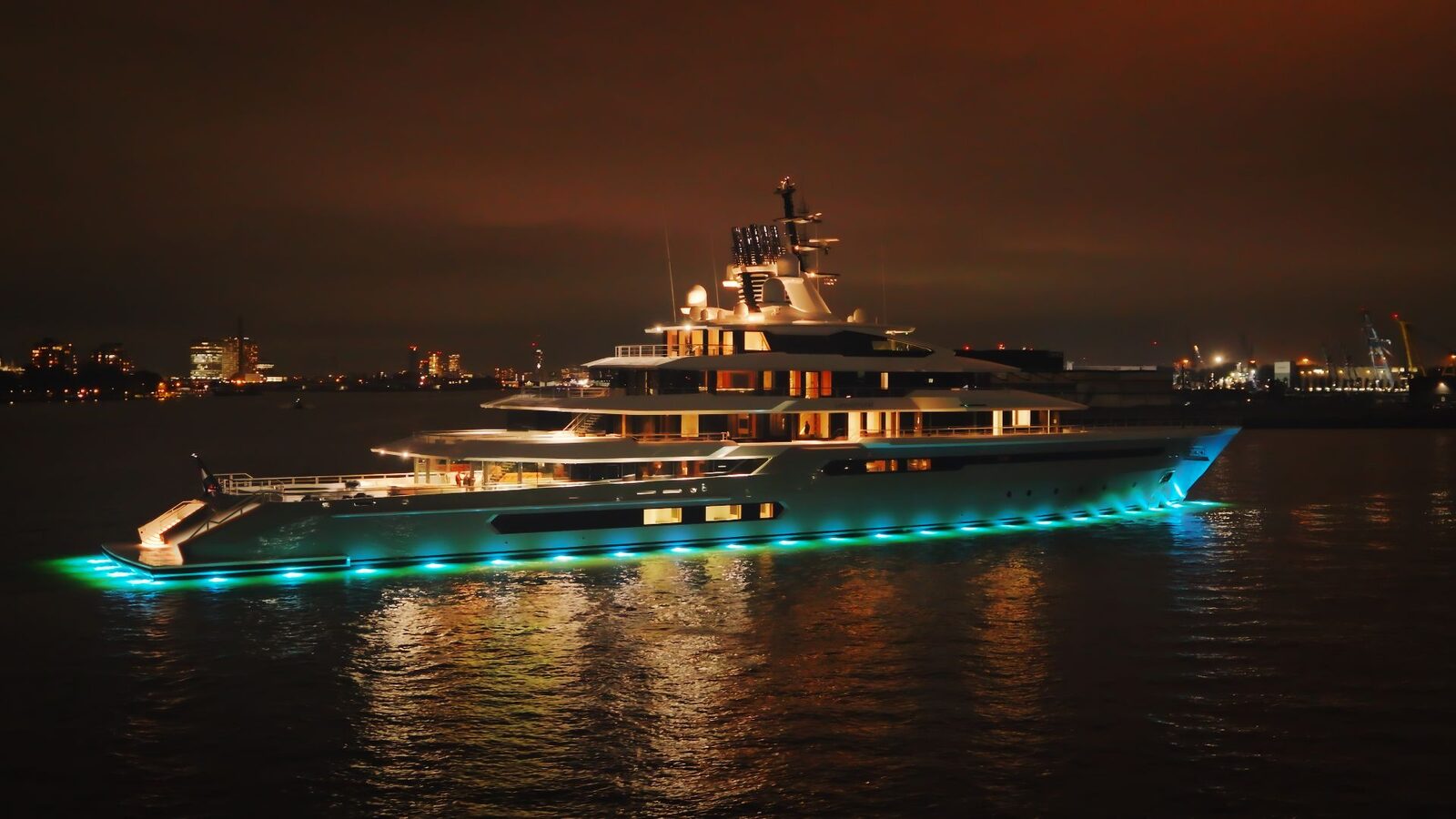
Photo above: Leviathan, boasting over 5 MW/hs of battery capacity, courtesy Oceanco