
Categories
Nano-composite solar technology firm Praxis targets superyachts
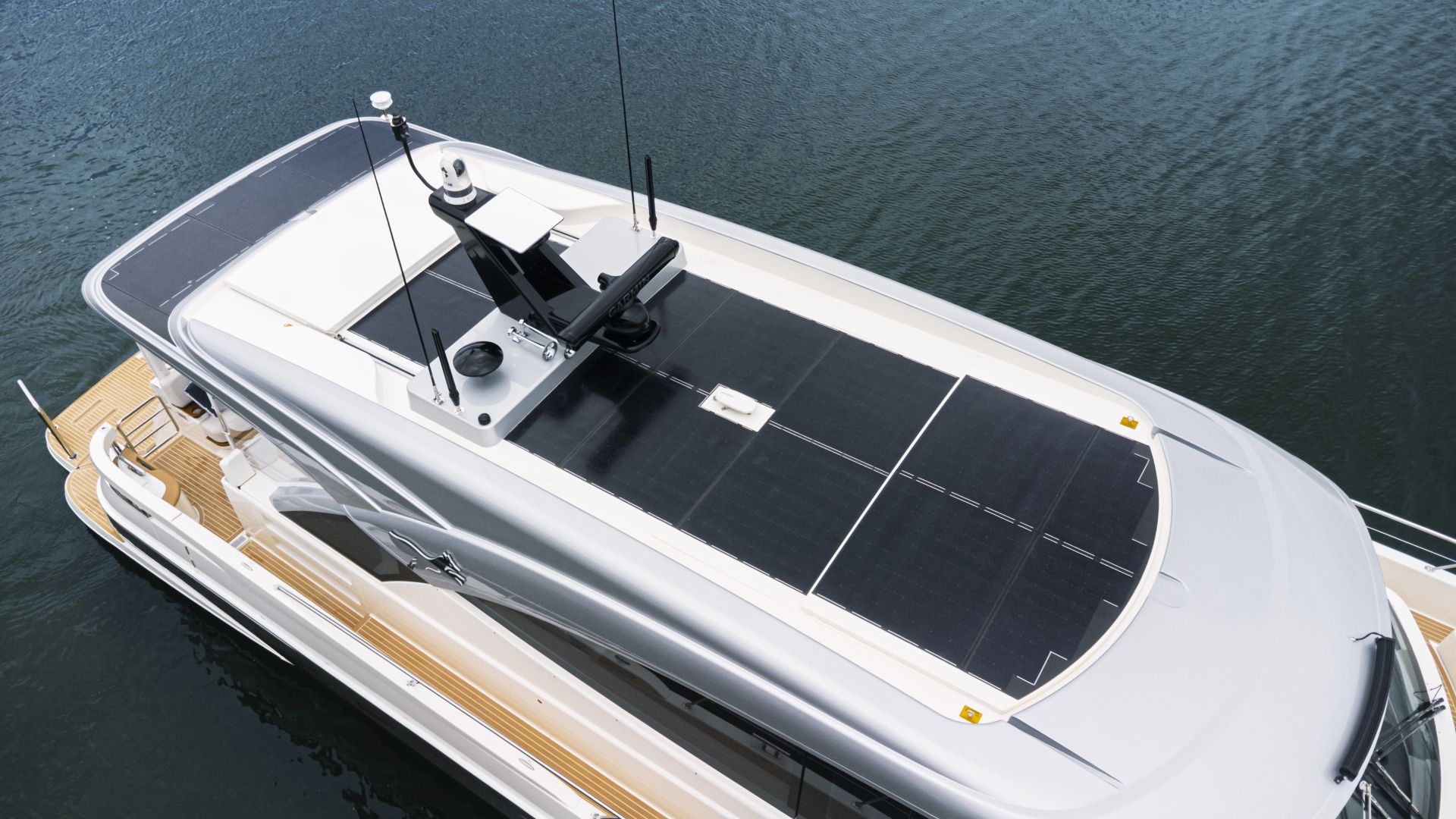
South Australian firm Praxis has developed its proprietary nano-composite solar technology over 18 years and now sees an opportunity for its application on superyachts.
Praxis solar is a composite with an optically transparent nano-composite skin embedded with solar cells, laminated into a hull, hardtop, or deck at the mould stage where it becomes structural and load-bearing, or fitted to an existing surface as a retrofit. This is in contrast to conventional PV cells that are bolted or affixed to a surface.
Praxis says its solar technology panels are less than 2mm thick and up to 85% lighter than a conventional rigid rooftop panel. The material is walkable and mouldable to follow complex curves across multiple planes. The material can also be retrofitted at under 2mm thick, according to Katie Donaldson, co-founder and executive director of Praxis. “That matters given that the refit market is one of the fastest-growing parts of the superyacht industry,” she says.
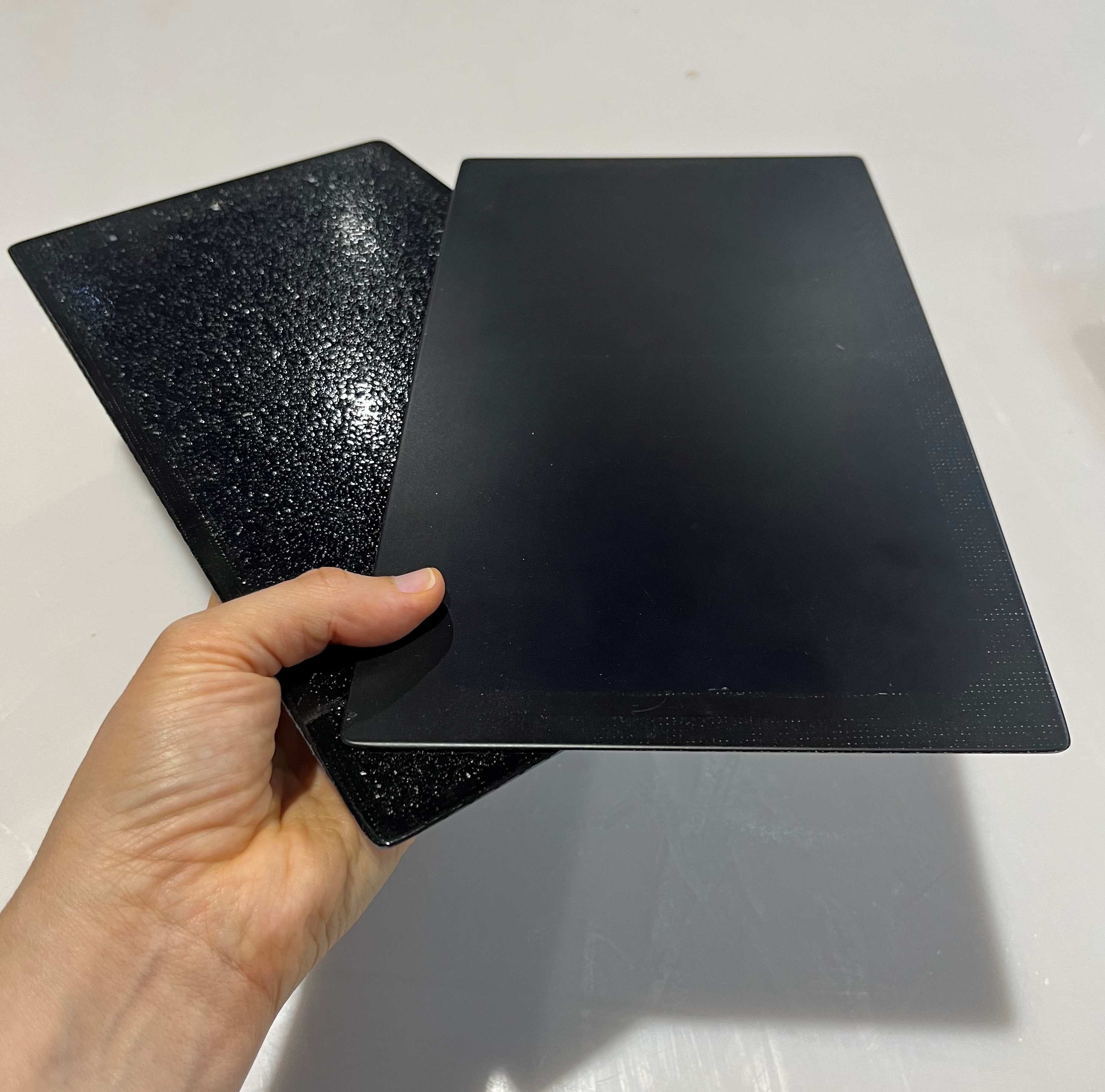
Samples of Praxis' matte and non-slip solar power surfaces
“We reconceived what a solar panel could be, and we demonstrated it in the toughest operating environment there is – the open ocean,” says Rory Linehan, Chief Executive Officer of Praxis and formerly of BAE Systems and McLaren.
To date, Praxis has worked with luxury motor yacht brands such as Grand Banks and Riviera Yachts, with Praxis’ solar skin engineered into the hardtop of every Riviera model at the design stage, according to the company. Riviera has reportedly seen a 75% reduction in diesel generator use, with some owners anchoring off-grid for up to three days without a generator.
Praxis also designs the full electrical architecture from the solar panel to the battery, including optimised power management for best results.
Donaldson says that her company’s work with motor yacht builders “reflects where we chose to prove the technology first, not a ceiling on where it can go,” adding that the benefits of Praxis’ technology are not specific to vessel size. “If anything, the case strengthens at superyacht scale, with considerably more surface area and more complex geometry to put to work.”
Praxis has also deployed its technology on uncrewed surface vessels currently at work for the Royal Australian Navy.