
Categories
Scaling up: Corvus Energy pushes boundaries on maritime battery capacity
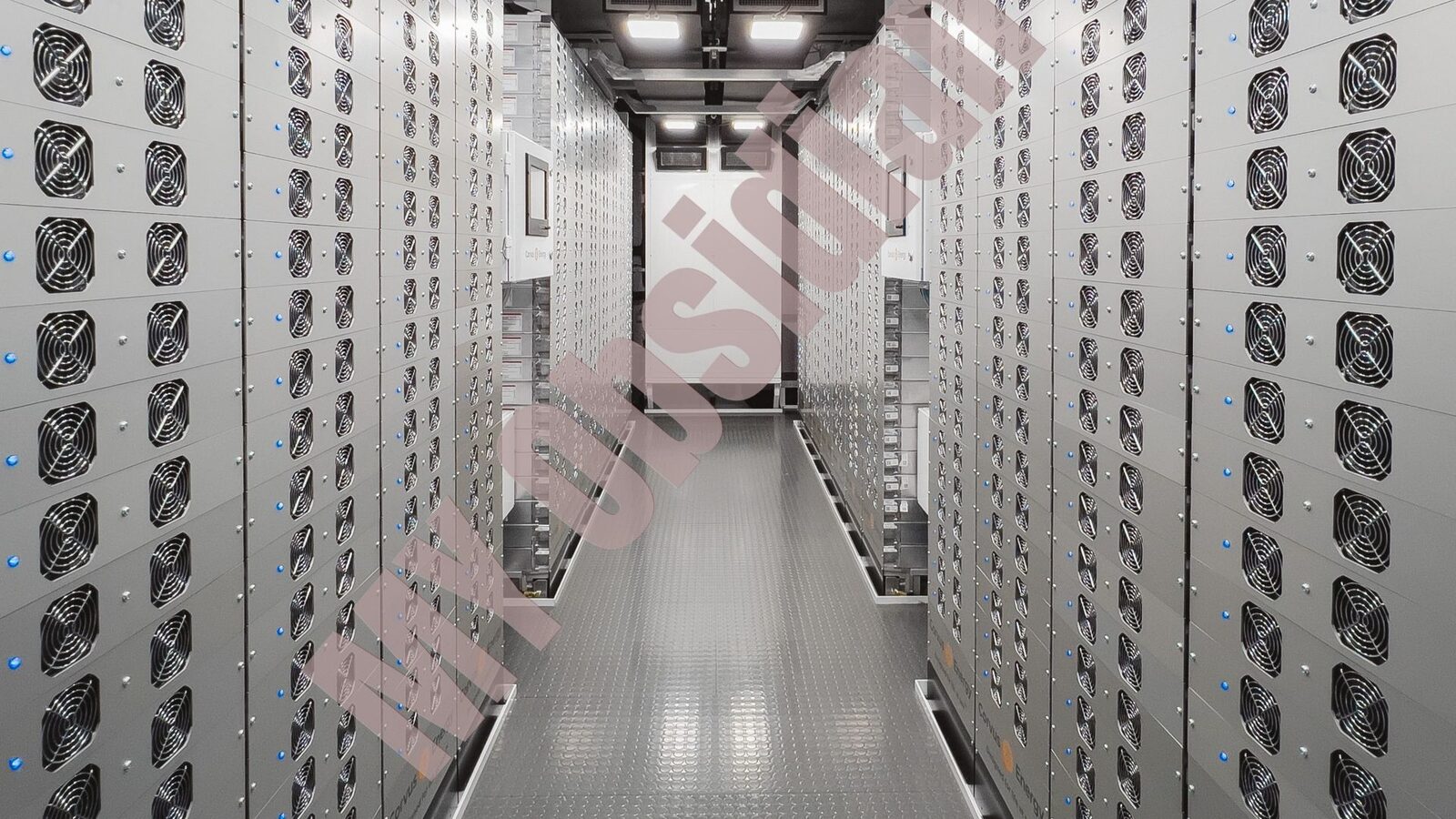
Today, the measure of installed battery capacity on a superyacht might be in the hundreds of kWhs to MWhs. Very soon, it will be up to even tens of MWhs. That is the clear aim of Corvus Energy, the Norwegian battery solution provider to the maritime industry.
Though Corvus may be the market leader, claiming over 50 per cent of all maritime installations, it is not the only maritime battery provider.
Koen Boerdijk, Vice President Sales Benelux & UK, leads the superyacht segment for Corvus Energy. He attributes Corvus’s market lead to the company’s battery installation design and technology. “We differentiate ourselves because of our being best in class in terms of energy density,” says Boerdijk. “So, our volume (required) is less and our weight is less, compared to competition.”
Boerdijk estimates that the weight requirements for Corvus Energy systems are between two and four kilogrammes per kilowatt-hour less than those of chief competitors. “That's a lot if you imagine that some superyachts are equipped with multiple megawatt hours of battery system capacity.”
Battery-electric operation reduces noise, odour and vibration as well as fuel consumption, making life on board easier and cleaner while opening up restricted areas for exploration.
In October this year, Corvus announced DNV type approval for its Blue Whale NxtGen Energy system, based on the same NxtGen Architecture aimed at satisfying the need for ever-larger battery installations. "We see a clear trend towards larger battery installations, as the economics of electrification improve and vessels need longer electric range and more operational flexibility. We need products with high safety, competitive cost profile and significantly more energy capacity, so customers can deploy larger and more cost-effective battery systems with confidence,” said Thor Humerfelt, Head of Product Innovation, in a LinkedIn post around the announcement.
The Blue Whale NxtGen system is designed for vessel installations ranging from 1 MWh up to 200 MWh. For smaller battery rooms and less accessible spaces there is the Dolphin NxtGen Energy System, which has more compact modules.
The NxtGen systems are designed to fit together like Lego bricks, according to Boerdijk. Systems consist of multiple connected modules, with each module containing multiple cells. Notably, the design incorporates venting and cooling at the individual cell level, an important safety feature.
Boerdijk emphasises that modules are type-approved to ensure that there can be no cell-to-cell propagation, meaning that a thermal runaway in one cell will not spread to neighbouring cells.
Boerdijk notes that Corvus has already delivered a 5 MWh NxtGen system to a yacht launched in 2025. He reckons that a previous-generation system would have had approximately one-third of the energy capacity within the same footprint.
This opens up new possibilities for builders and buyers. The last two years have seen the launch of a handful of superyachts with battery capacities of more than 5 MWhs. More are likely on the way.
A 2026 analysis by Lateral Naval Architects, keen promoters of battery technology, showed that a 70-metre yacht of around 1,700 GT would require approximately 37 to 50 MWh of capacity to meet propulsion and hotel load demand over a typical one-week Mediterranean charter, covering around 350 nautical miles.
In September, Lateral released ENX, a concept superyacht design powered by a 60 MWh energy storage system housed across three battery rooms. ENX has a 12-metre beam, a 3.5-metre full-load draught and a volume of 1,700 GT. Lateral expects the battery system to weigh around 300 tonnes, using technology that the company hopes will offer approximately 20 per cent greater energy density than is currently available within the next five years.
Large-scale battery installations will also require more than just a new room or specialised installation. Crew training will be essential, something that Boerdijk says Corvus offers. Corvus Energy complies with cybersecurity type approvals and there is more.
Corvus maintains a system for remote monitoring of vessels fitted with its battery installations, referred to as "Lighthouse". Through this platform, Corvus engineers can check on alarms or provide remote support. “We invested in developing Lighthouse because it saves time, works efficiently, and provides value to shipowners,” says Boerdijk.
Not all battery solutions are equal. Selecting the right type and size battery system for the operational profile, how the batteries will be used, is key to optimize energy efficiency and system lifetime. Battery systems can be used to level the loads on the diesel engines, provide black-out support and emergency power, and even replace a genset. To provide solutions for a wide range of operational profiles, Corvus offers multiple NxtGen battery system types and variations, including “Power” and “Energy” options. Power is designed for sudden bursts of intense discharge while Energy is meant for slow discharging and charging rates.
Scaled-up electrification in the broader maritime industry is growing rapidly. In 2025, the world’s largest all-electric vessel, a 130-metre ferry, began operation. It features a 40MWh Corvus Energy Dolphin system weighing over 250 tonnes – said by builders Incat to be four times larger than any other maritime battery system. As the experience behind large battery deployments rises, so do the possibilities for owners.
Images published with permission from Corvus Energy