
Categories
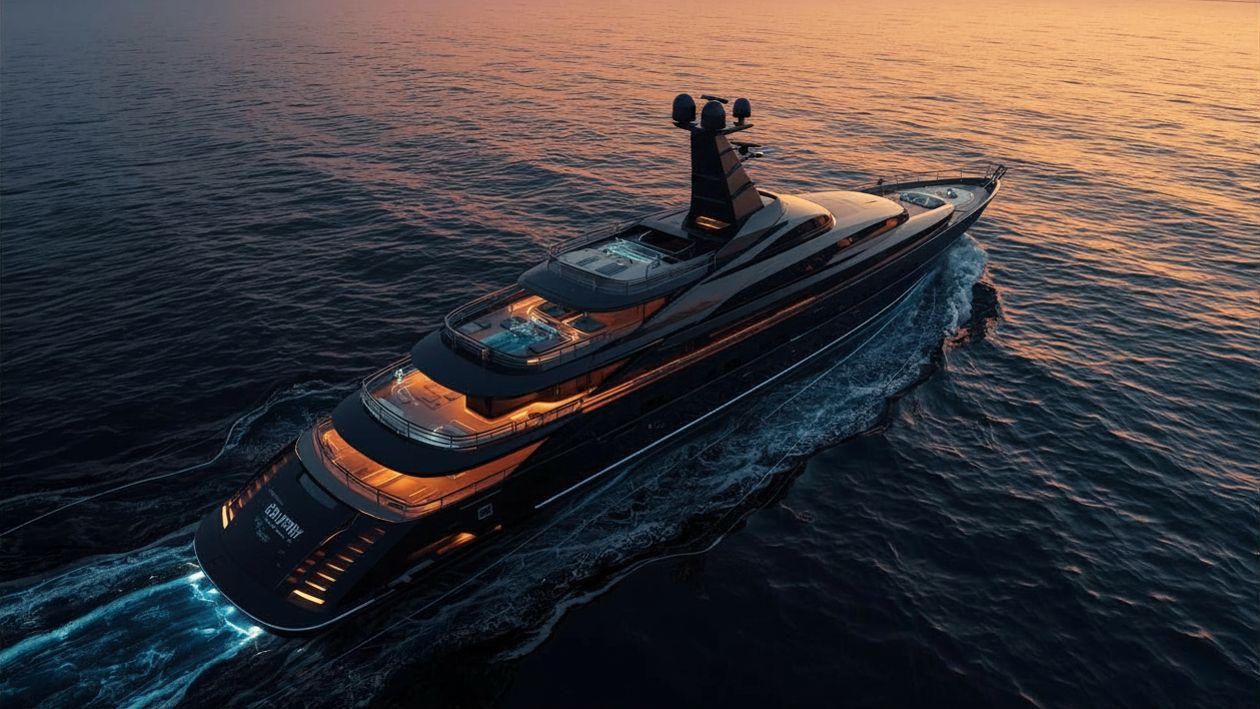
Benetti continues to push boundaries with hybrid propulsion on M/Y Dagger
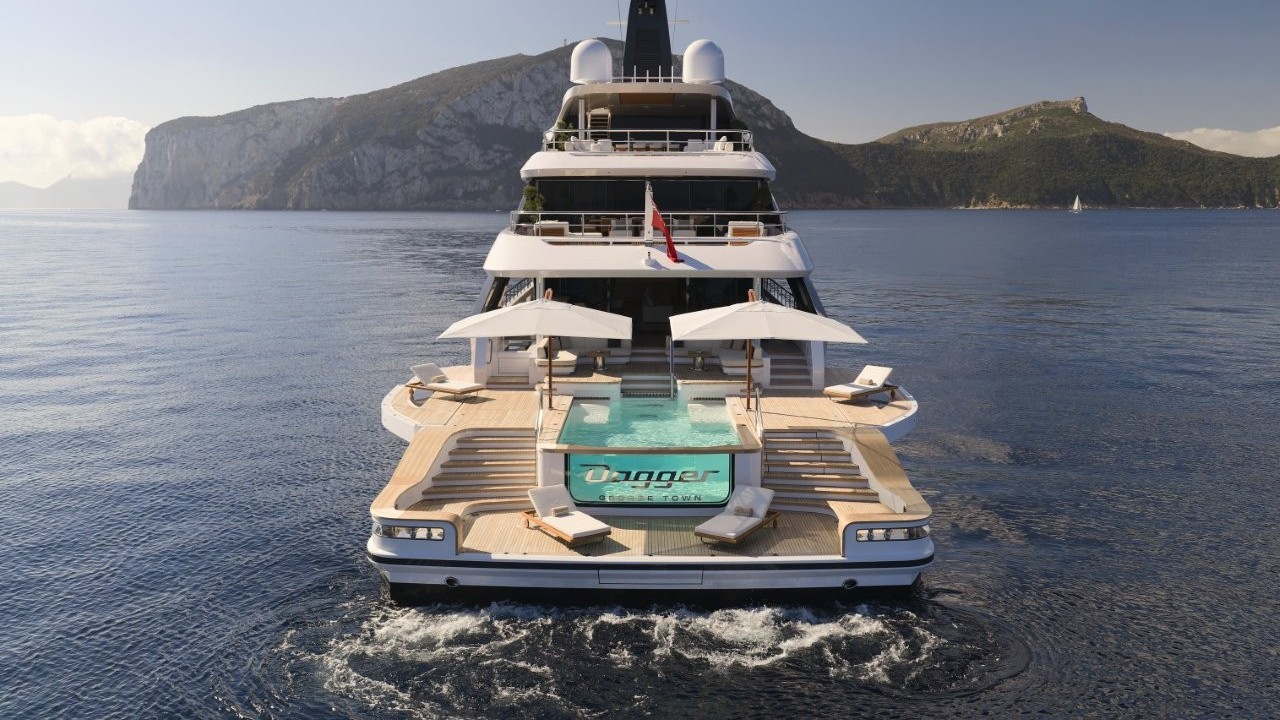
Italian superyacht builder Benetti continues its remarkable 'Green Route' strategy with the launch of M/Y Dagger, which features a sophisticated array of hybrid propulsion technology. The vessel follows several other new launches from the yard this year that incorporate hybrid architectures—including the B.Neos series, on which hybrid propulsion is now installed as standard.
The 67-metre Dagger features a steel hull and aluminium superstructure, with a gross tonnage of 1,334 GT.
The heart of the vessel is the engine room, housing what Benetti calls "an integrated, modular, and reversible system." In this setup, the main engines, generators, and battery packs can operate in variable combinations to achieve optimal performance and energy efficiency.
Two Caterpillar C32 main engines (rated at 1,193 kW between 2,000 and 2,300 RPM) and three Caterpillar electric generators are bridged by two 200 kW shaft generator/electric motors supplied by VEM, a German manufacturer of electric drives for the maritime sector. The VEM units are bidirectional, functioning both as generators and as electric propulsion motors. In Power Take-Off (PTO) mode, they harness power from the main engines to supply hotel loads and recharge the battery banks. In Power Take-In (PTI) mode, they convert electrical energy from the generators or battery packs into direct thrust at the propeller shafts.
M/Y Dagger is also fitted with a controllable-pitch propeller, allowing for swift manoeuvring and speed adjustments without altering the engines' optimal RPM operating range.
The hybrid system is supported by a 360 kWh sodium-metal chloride ('salt') battery pack with a peak-shaving capacity of up to 150 kW. Benetti notes that salt batteries offer intrinsically higher safety against fire risks and thermal runaway compared to commonly used lithium-ion chemistry. This enables the battery modules to be integrated directly into existing technical spaces, eliminating the need for an isolated, dedicated battery room equipped with complex fire suppression systems.
The main trade-off lies in energy density; salt batteries are less energy-dense than lithium-ion units, thereby requiring slightly more physical space in the engine room. However, Benetti highlights that salt batteries are completely immune to degradation caused by long periods of inactivity and fully restore their performance upon reactivation. Furthermore, generators aboard Dagger can be shut down at anchor for up to two hours while maintaining full hotel services in silent mode.
The hybrid architecture provides three distinct operating modes:
Enhanced Comfort Mode: Enables silent coastal cruising at speeds of up to seven knots under 100% electric propulsion. The diesel generators feed the electric motors while the battery bank manages peak loads.
Extended Range Mode: Designed for long-distance cruising on thermal main engines alone with the diesel generators switched off. The shaft generators cover the onboard electrical demand, reducing generator running hours and achieving fuel savings of up to 15% compared to a conventional diesel-mechanical setup.
Eco Transfer Mode (10 knots): Tailored for long transits, running on a single main engine supported by the battery pack to minimise both fuel consumption and mechanical wear.
To further boost efficiency, integrated heat exchangers recover thermal energy from the generators for onboard utilities without increasing overall fuel consumption. Exterior design for M/Y Dagger was penned by RWD, while the interior styling was created by Sinot Yacht Design.