
Categories
How MB92 is driving the future of superyacht refit technology
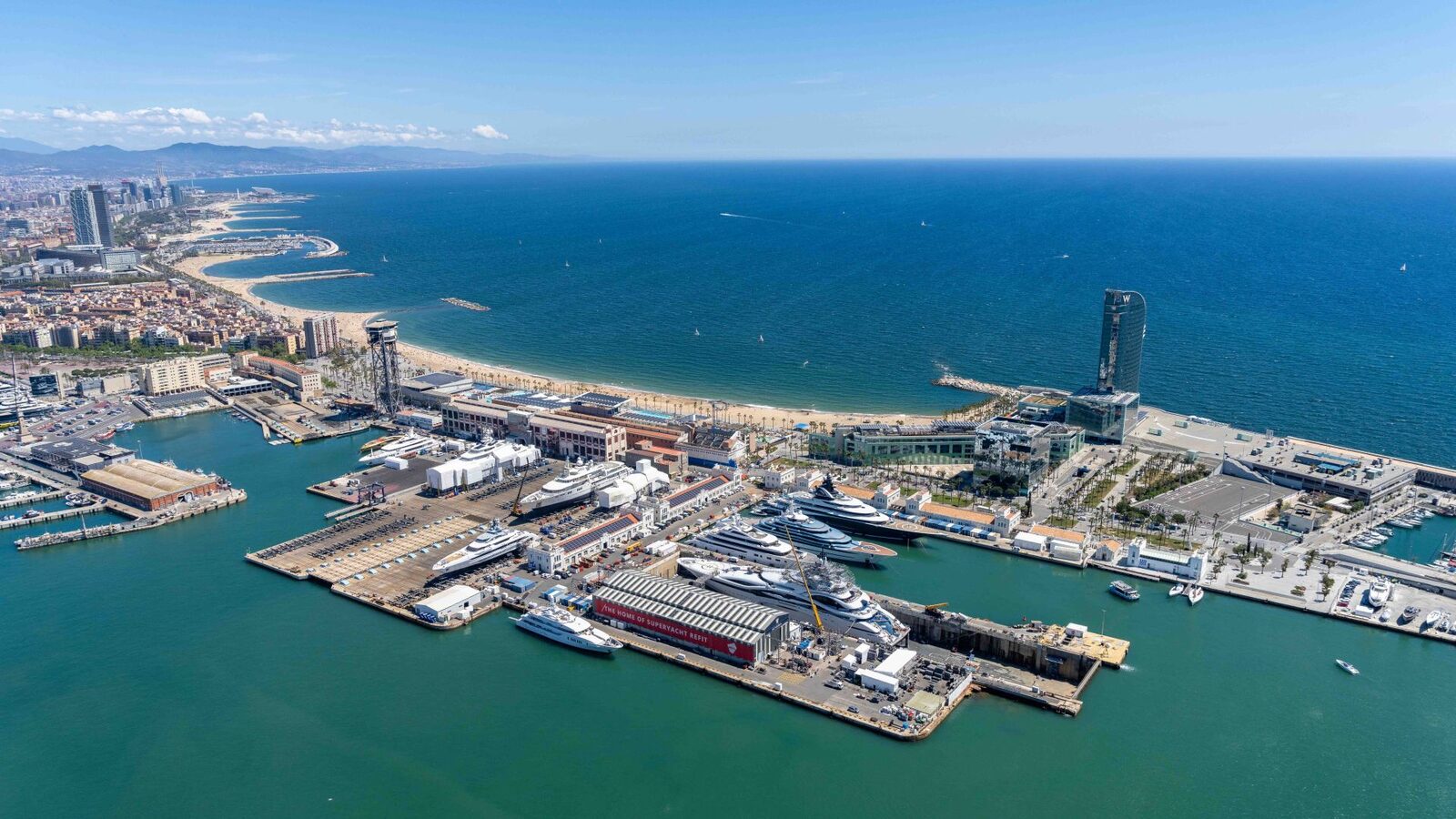
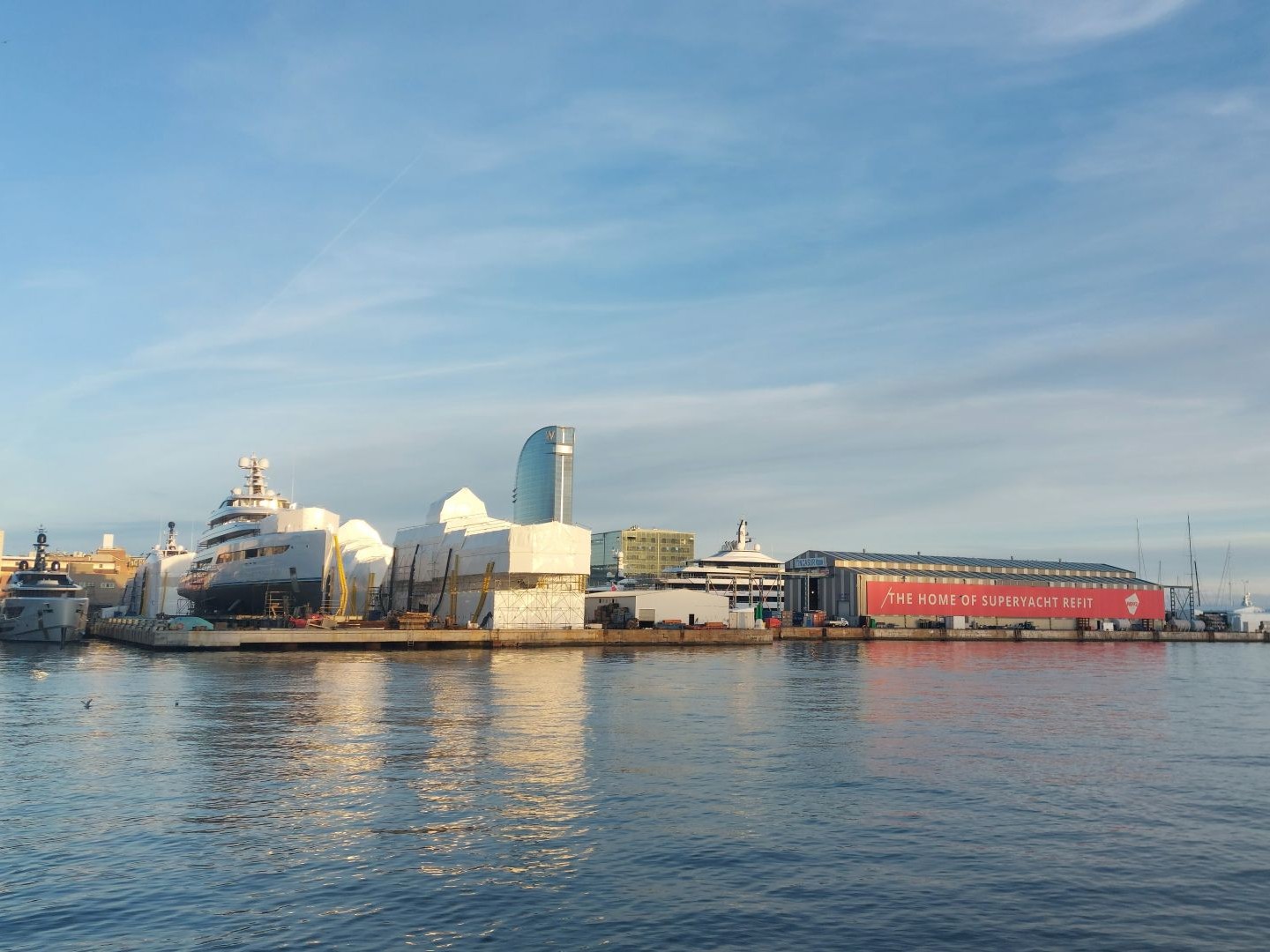
Earlier this year, MB92, one of the premier yards in superyacht refit, announced a major expansion of its facilities thanks to an extension of its concession in the Port of Barcelona to 2050 and possibly 2055. Over the past three decades, MB92 has continuously invested in its Barcelona facilities to anticipate the evolving needs of the superyacht market. The new €40 million expansion plans signal a deepening relationship between MB92 and its list of partner-suppliers, as well as a continued commitment to sustainability and operational efficiency.
Jordi Ariet, the managing director of MB92’s flagship yard in Barcelona, says that these new capacities will allow better segmentation of the yard and its work, leading to more efficient operations. The need for better allocation of resources is rising, as the fleet continues to grow and larger vessels have more toys on board, or come with shadow vessels, which also need to be hoisted and placed, says Ariet.
The expansion of MB92 Barcelona’s haul-out infrastructure significantly enhances the shipyard’s ability to serve superyachts across all major size segments. The addition of a 680-tonne travelift plus a 110-tonne electric travelift will replace the existing 150-tonne unit, strengthening the dedicated travelift area for yachts of up to approximately 50 metres. For larger vessels, the new 2,000-tonne synchrolift and associated hardstanding facilities will provide a dedicated work area for yachts of up to around 70 metres, while the existing 4,800-tonne ship lift and hardstanding facilities continue to support projects of up to 110 metres.
Together with the graving dock, capable of accommodating superyachts of up to approximately 180 metres, these investments provide MB92 Barcelona with dedicated lifting and work-area infrastructure for each yacht-size segment. The result is a more flexible and efficient operating model that enables the shipyard to optimise capacity and streamline workflows.
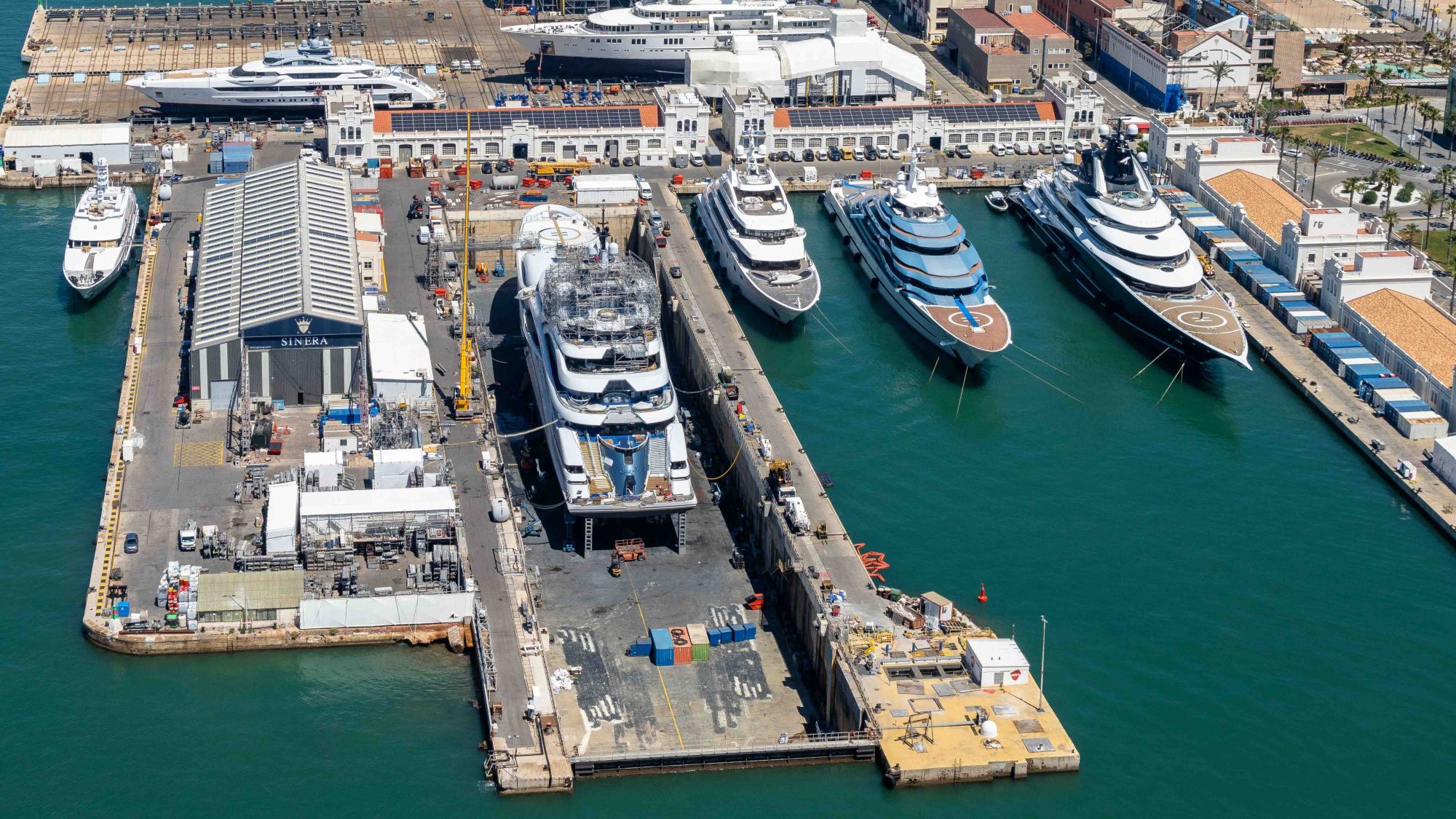
MB92 will expand its capacity to efficiently handle superyachts of various sizes
The Western Dock is also being expanded by 2,000 square metres, providing additional quay length, in which Ariet expects to have berthing space for larger yachts, as well as storage, workshops, and additional services. “We have more customers and more contractors coming all the time, so we need to expand,” he says. The 220-metre Graving Dock, built in 1974, will be upgraded with new equipment that will give it another 50 years of operation, according to Ariet.
Sustainability in operations is now a top priority
As superyachts try to be more efficient and sustainable, so do shipyards. For MB92, reducing the environmental impact of its operations has long been a priority, with several new initiatives planned as part of the investment programme. MB92 is planning a new on-site recycling centre, enabling materials from yachts and shipyard operations to be processed locally rather than transported to external facilities. The centre will handle a wide range of waste, including batteries, plastics and electronic equipment, helping to reduce transport requirements and the environmental impact of waste management.
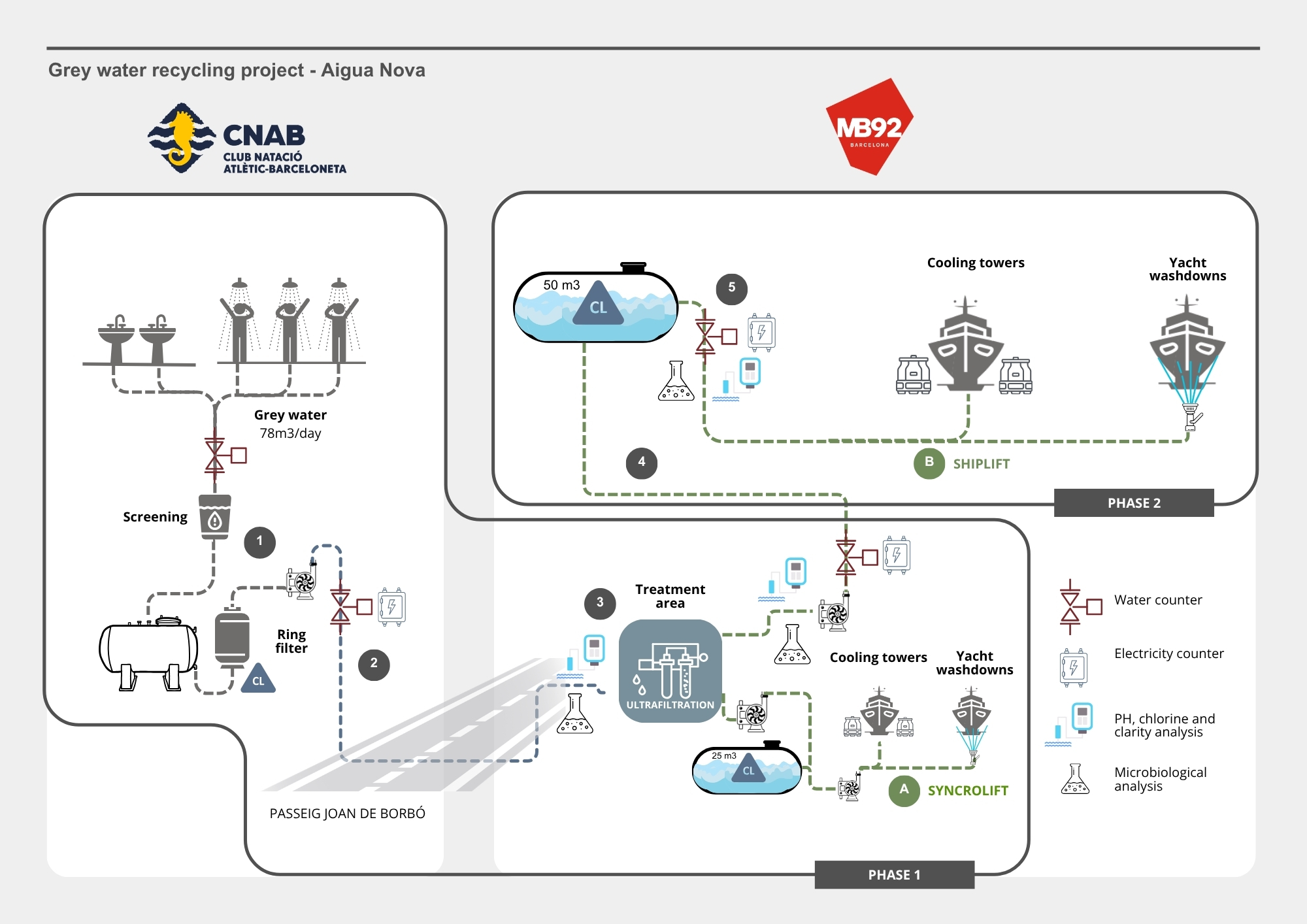
MB92's new freshwater management plan
Water management is a hot topic. Currently, MB92 has different collection points and an existing vacuum network for grey and black water from vessels and the shipyard. One initiative is to install a biological wastewater treatment plant that will collect all wastewater and turn it into cleaning water for the yard. A second initiative involves capturing grey water from the showers across the road at a local gym, piping it across to the shipyard to be treated and used as technical water—the water for testing or flushing yacht systems—which will be distributed via a new distribution network within the yard. “So let us just say that freshwater consumption by MB92 will be reduced massively,” says Ariet.
Noise reduction is another focal point for MB92. Ariet says that due to the yard’s location in the heart of Barcelona, noise has always been a sensitive issue. “We have been working for the last 15 years with a specialised company that handles noise and we have a lot of useful research data about the type of noise created,” he says. “What we are going to do is create a prototype that is able to change or make different frequencies to reduce the sound using a system of microphones and (noise) emitters; they can counter the frequency and reduce noise.”
The challenges in a modern refit
Superyacht refit is vitally important to owners and operators, and securing a refit slot is likely to get harder, even as yards in the Mediterranean try to expand capacity. In 2025, 62.5% of all refits worldwide were conducted in Mediterranean yards, with another 30% done in Florida, according to BoatPro data.
The existing fleet is growing, yet only 1% of superyachts in any given year are scrapped, according to data provided by MB92. Nearly 40% of all superyachts over 30 metres LOA underwent some form of refit work in 2025.
That points to an increasing focus on the lifecycle of a superyacht, according to Ariet, and to increasingly complex refit projects to maintain compliance with regulations and stay up to the standards expected by owners.
MB92 Barcelona MD Jordi Ariet
MB92 Barcelona handles approximately 100 projects each year, on yachts ranging from 30 to 150 metres, with an average length of 60 to 70 metres. No two projects are alike, and the diversity and unpredictability of refit work demands a very different approach to a new build.
“We have all kinds of projects, from interior refits, to changing engines, to hull extensions, and that means you need a very strong technical department. You need to have the people with experience to manage the complexity of these kinds of projects.”
Part of lifecycle management involves data, predictive maintenance, and AI tools. “There is a lot of data which is very disaggregated,” says Ariet, adding that manufacturers each have their own datasets. “We need to find a way to collect all this data and be able to analyse it to propose maintenance to the customers, instead of responding when the yacht has already had an incident or something has broken.”
That challenge directly concerns the refit work that MB92 is tasked with. Operational data on a superyacht can give insights into what kind of equipment and technology would serve that yacht best. A superyacht that spends most of its time at anchor might benefit more from energy savings in HVAC, as opposed to expedition yachts that do long transits.
MB92 has also invested in digital tools to improve the experience of owners and yacht teams throughout the refit process. Its proprietary platform, The Bridge, provides greater transparency, simplifies communication and gives clients easier access to project information, while its integration with Pinpoint Works will further streamline collaboration.
The partnership plan
MB92 has a well-developed supplier network built over 30 years including OEMs and market leaders, with many relationships going back to the origins of the company. To date, the company says it has a global network of approximately 1,700 suppliers.
An additional 45 supplier-partner companies have service centres or workshops located within the MB92 yard. “That gives us a lot of flexibility to be able to do work on board,” says Ariet. “And it is something that not many people know.” At least, not yet.
Refitting for the future
MB92 is also helping owners explore how their yachts can become more efficient, sustainable and better suited to evolving needs. Launched in 2023, its Refit for the Future programme combines technical expertise with solutions developed alongside specialist suppliers, helping owners identify and plan improvements ranging from relatively simple upgrades to major conversions.
“Refit for the Future was created to help owners reduce their yacht’s environmental impact while improving its performance, value and longevity,” says Ariet. “What we’re seeing is that owners increasingly recognise the benefits go beyond sustainability. These investments can also deliver tangible improvements in operating costs, efficiency and the way they use their yacht.”
With demand for refit continuing to grow and new technologies creating opportunities to improve existing vessels, Ariet sees a promising future for the sector—and an increasingly important role for specialist refit yards in helping yachts adapt to changing expectations and requirements.
Photos and images courtesy MB92