
Categories
Could kite propulsion and power be the future for superyachts?
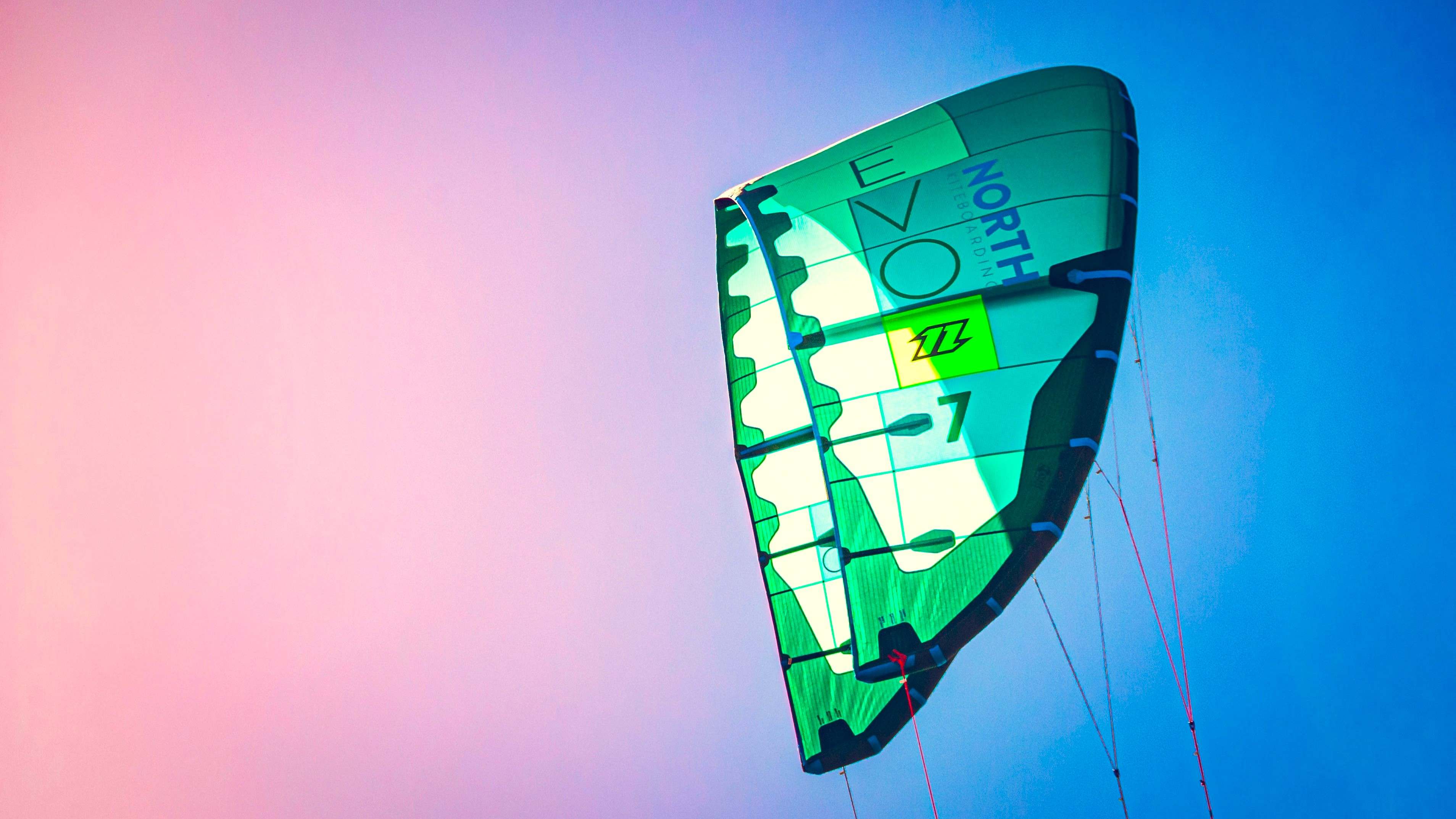
The idea of a kite powering a sea-going vessel has been around for years, but with limited traction. As far back as 1827, British inventor George Pocock proposed using kites to power carriages instead of horses and as auxiliary propulsion for sailing vessels. Pocock wrote of bystanders watching his kite-powered chariot seeing it “rather as a vision than a reality.”
A new set of startups is again trying to turn kite power from vision into reality. Rising fuel prices have also boosted the demand for clean energy solutions, breathing life back into the idea of wind-assisted propulsion, especially in the commercial maritime industry.
While most commercially oriented solutions, such as Flettner rotors, will have little appeal to superyacht owners, kites could be a suitable solution for propulsion and power generation.
Kite Dynamics is a German startup focused on resurrecting kite sails as a means of vessel propulsion, and perhaps more importantly, as a source of energy production at sea.
Since 2020, the company has been developing a kite system that quickly rises using a high angle of attack into the wind and then, with a change in aerofoil shape, descends with relatively little power required. Repeating this process over and over creates a yo-yo effect on the control lines, and that back-and-forth motion of the lines can be used to generate electricity. It is a process called “kite pumping”. A vessel could also use hydrogenerators – propellers submerged in the water flow over a hull – to capture energy during moments of maximum pull provided by a kite sail system.
“With our kite charge component, with the kite pumping and generating energy, a yacht can now sit at anchor and generate energy,” says Tim van der Steene, Head of Marine Technology for Kite Dynamics and a former yacht builder. He reckons that even with a smaller kite system, a superyacht at anchor could put 100 kilowatts of power into the battery banks. “Superyachts sit at anchor 80 or 90% of the time, and what do they need? Energy.”
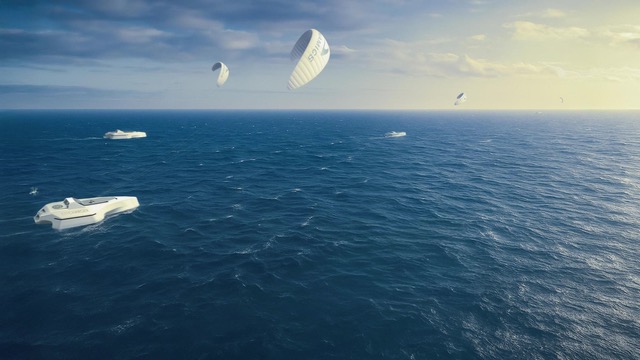
A modest proposal: A fleet of energy ships using kite systems to generate megawatts of power per ship - Image from Kite Dynamics
The engineers at Kite Dynamics even envision a series of “energy production vessels” – autonomous 80 to 150-metre plus trimarans equipped with large kite sails generating 30 megawatts plus of electricity per vessel. “Our technology was planned from the get-go to produce energy on the open ocean,” says Felix Bartels, Kite Dynamics’ Head of Technology, adding that the investors in Kite Dynamics are looking to scale vast amounts of wind energy at sea.
But for a superyacht, or any vessel, the Kite Dynamics solution can both propel and provide power. “As soon as the whole product is ready for deployment, we are happy to send it to anyone who wants to use it for propulsion,” adds Bartels.
For a superyacht, the company offers a relatively compact system located at the bow that can easily deploy and land, generating all the power required for its hotel load or equally, providing most of the propulsive power needed to undertake oceanic crossings. Both men reckon that a Kite Dynamics system housed in a 20-foot container or modular integrated system could continuously generate 200 kilowatts of power.
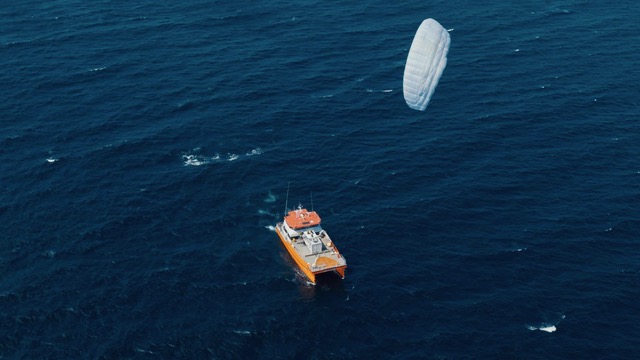
Kite Dynamics' test offshore Lisbon, Portugal with a 60sqm kite - Image from Kite Dynamics
In June 2025, Kite Dynamics conducted the first test of its system with a 15-square-metre kite with a towing capacity of up to 1.5 tonnes in the seas off Denmark. The test showed acceleration of an 80-tonne vessel from 1 to 4.3 knots in less than one minute with a wind speed of approximately 20 knots. This was followed in 2026 with tests in Portugal with a 60 square-metre kite achieving speeds of 6.5 knots with a similar 80-tonne vessel. The company is focused on achieving technical and engineering milestones needed to deploy at sea at an industrial scale.
The kite and software have been developed in-house. The kite is a fabric overlay used to create the aerofoil shape, with an internal net structure made of Dyneema, which allows the kite to absorb enormous pulling force. A 15-square-metre kite can handle up to 3 tonnes of loading force.
The system uses a four-line control system, controlled by a series of captive winches and gearboxes. Previous systems had used a single line with a control mechanism located beneath the kite, which both men say made deployment and flight and scaling more difficult. The control system and kite design used by Kite Dynamics allows for a higher aspect ratio for maximised lift and therefore more power.
Bartels and van der Steene both say the next major milestone for the company will be to create a fully automated solution for launching, using and retrieving the kite system with minimal crew intervention. Another system is being built in Stuttgart which will further test the energy generation capacity of the system.“For us, the whole long-term process is leading to autonomous operation,” says Bartels.
Kite Dynamics is not alone in developing kite systems for power. SkySails, another German company, has dropped its marine propulsion business to focus exclusively on power generation on land. Windfisher in France proposes to use balloons in the shape of Flettner rotors to generate power.
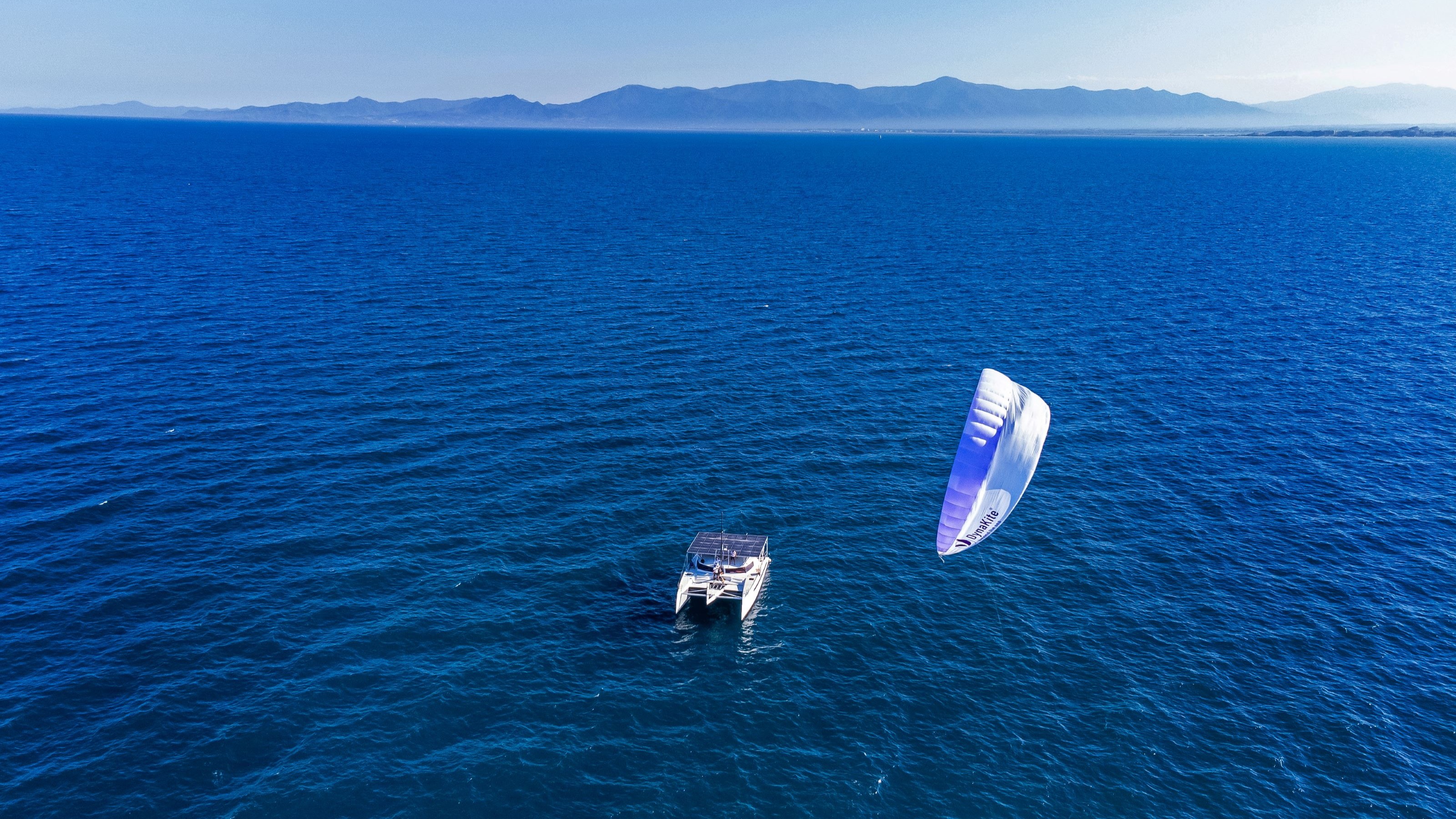
Beyond the Sea's test of the DynaKite - geared to vessels up to 20m - Image by Beyond the Sea
Beyond the Sea, a French startup, is focused on kite solutions for larger vessels. They have embarked on a different development path by testing their kite systems on partner vessels as an assisted propulsion solution. Its SeaKite, aimed at commercial and luxury vessels over 20 metres, has been installed or will be installed on four test vessels, including a 50-square-metre SeaKite on a gas tanker vessel. A 100-square-metre SeaKite was installed and tested on a 161-metre chemical tanker with 13,666 GT in 2025.
Van der Steene says that the most immediate benefit for superyachts of kite power would be in the explorer- or expedition-type of vessels. He notes that a modular and container-sized system would allow it to be deployed in a retrofit on the bow of larger superyachts. The heeling moment is relatively low on the vessel because the centre of effort is low. The kites operate best with an apparent wind angle of up to 55 degrees. That means retrofits are relatively easy.
A design that incorporates such a system can actually have the lines and winches located below deck to minimise disturbance to the vessel profile.
Could the system be deployed to a superyacht for propulsion and power? Bartels says the next steps for the company may depend on the demands of an investor. As with so many groundbreaking superyacht technologies, it only takes an ambitious owner to get things moving.